


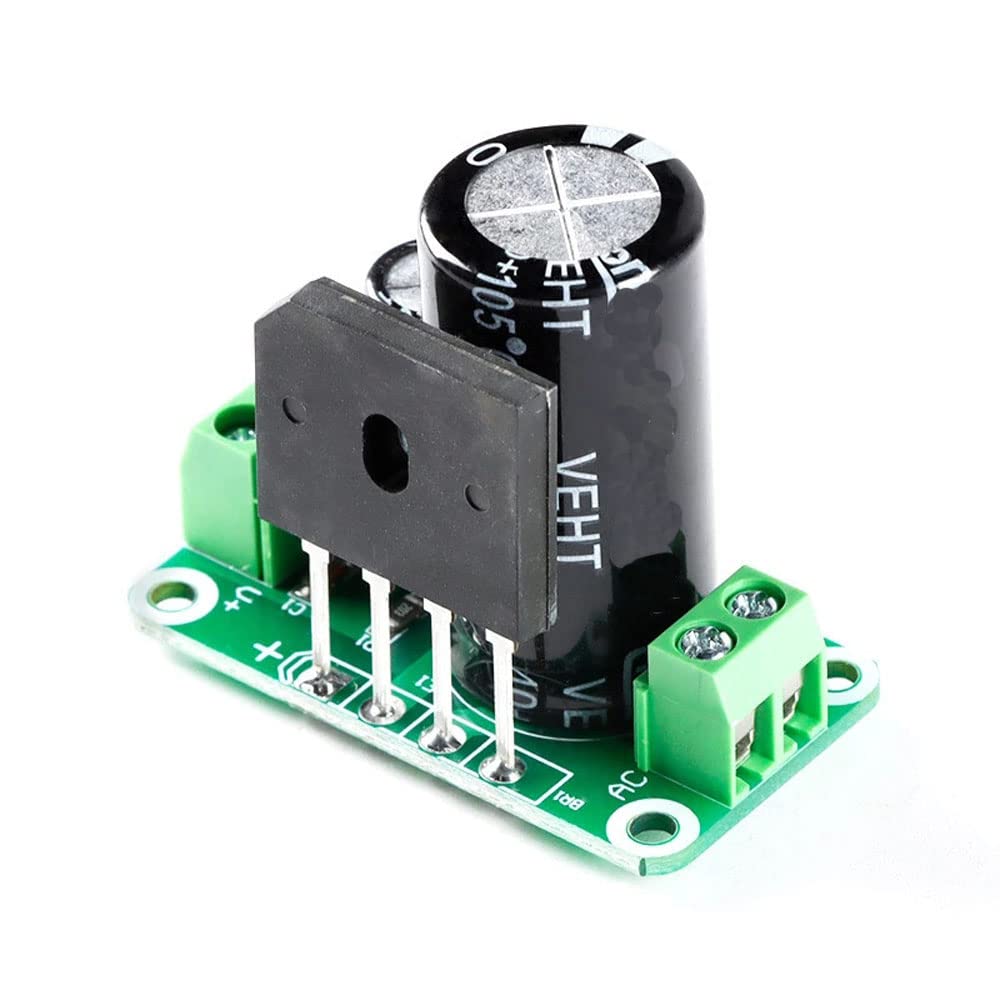
Single Power Supply Module Non Regulated Rectifier Filter Board 10A 4700UF 35V
In Stock
Categories: Modules
Overview
Description
10A Rectifier Filter Board
The 10A Rectifier Filter Board is designed for those who need reliable power solutions. This non-regulated power supply module converts AC to DC efficiently, making it perfect for various applications. With its robust design, it supports high currents and ensures minimal ripple for clean output.
This versatile 10A Rectifier Filter Board is engineered to provide stable and consistent power for a wide range of electronic projects. It excels in applications that demand high current and low ripple voltage, ensuring that your devices operate smoothly and efficiently. Whether you're working on audio amplifiers, motor controllers, or LED drivers, this board is your go-to solution. The integration of a 4700μF capacitor plays a crucial role in stabilizing the output voltage, which is essential for sensitive electronics. The board's durable construction ensures longevity and reliability, making it an ideal choice for both hobbyists and professionals alike.
Key Features
High-current support with a 10A bridge rectifier
4700μF / 35V capacitor for reduced ripple
Non-regulated output for pure rectified DC
Durable PCB design for stability
Easy wiring with secure screw terminals
Compact size for space-saving projects
Use Cases
This 10A Rectifier Filter Board is perfect for DIY enthusiasts and professionals alike. It is particularly useful for projects that require reliable DC power, such as audio amplifiers, motor controllers, LED drivers, and more. Whether you are a hobbyist looking to build your own circuits or a professional engineer designing complex systems, this board provides the stability and performance you need. Its compact design makes it easy to integrate into various setups, ensuring that you can achieve your project goals without hassle.
Don't miss out on the 10A Rectifier Filter Board. It's the perfect solution for your power needs. Order today and experience clean, reliable DC output for all your electronic projects! With its high current capacity and exceptional performance, this board is a must-have for anyone serious about their work in electronics.
Frequently Bought Together
Related Products
Single Power Supply Module Non Regulated Rectifier Filter Board 10A 4700UF 35V
380.00 EGP