
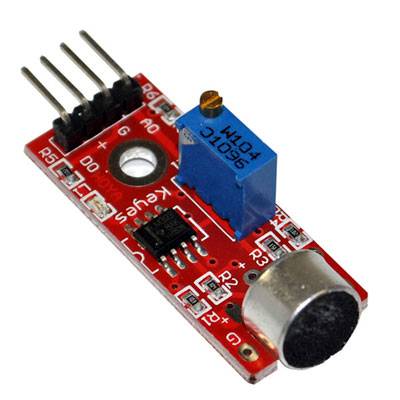

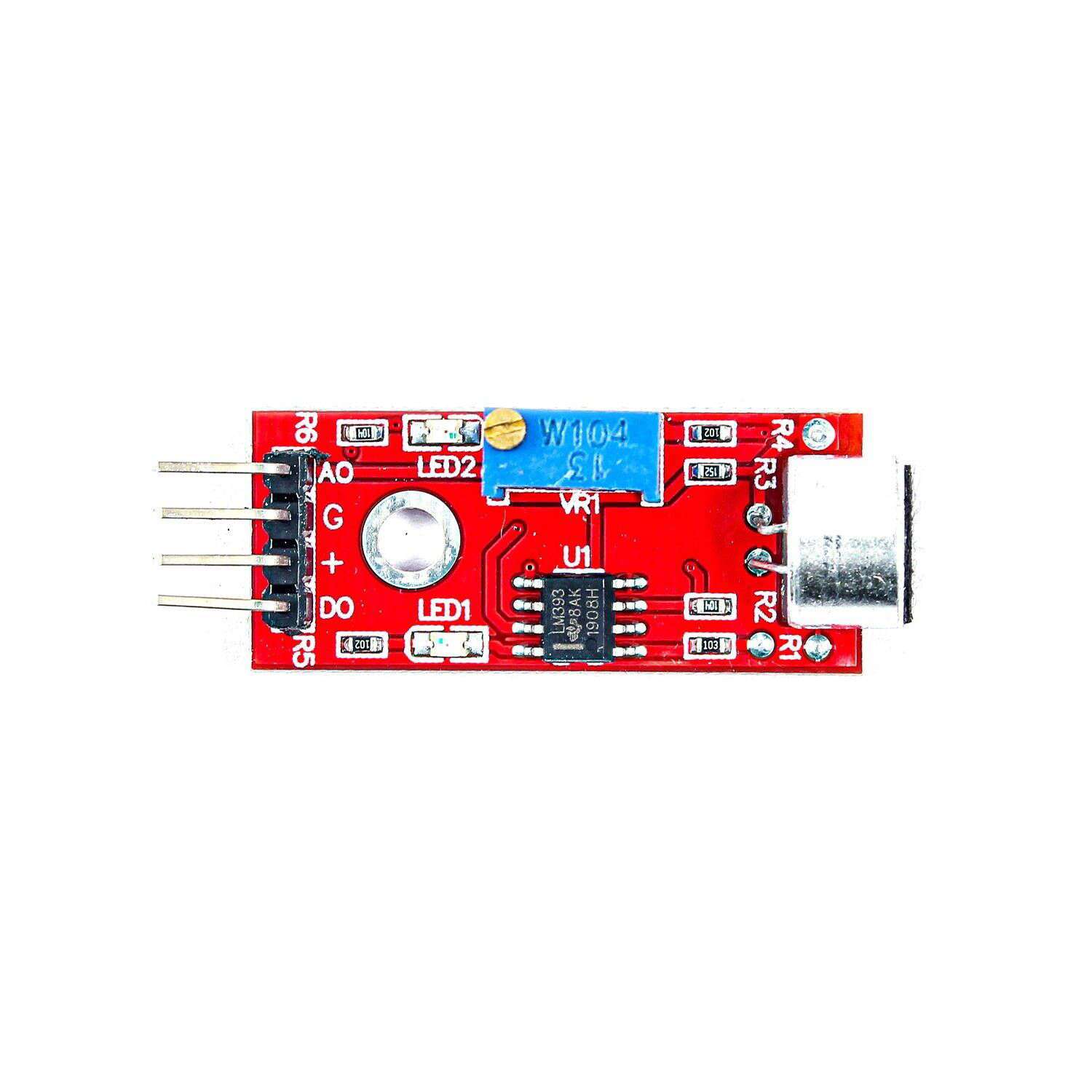
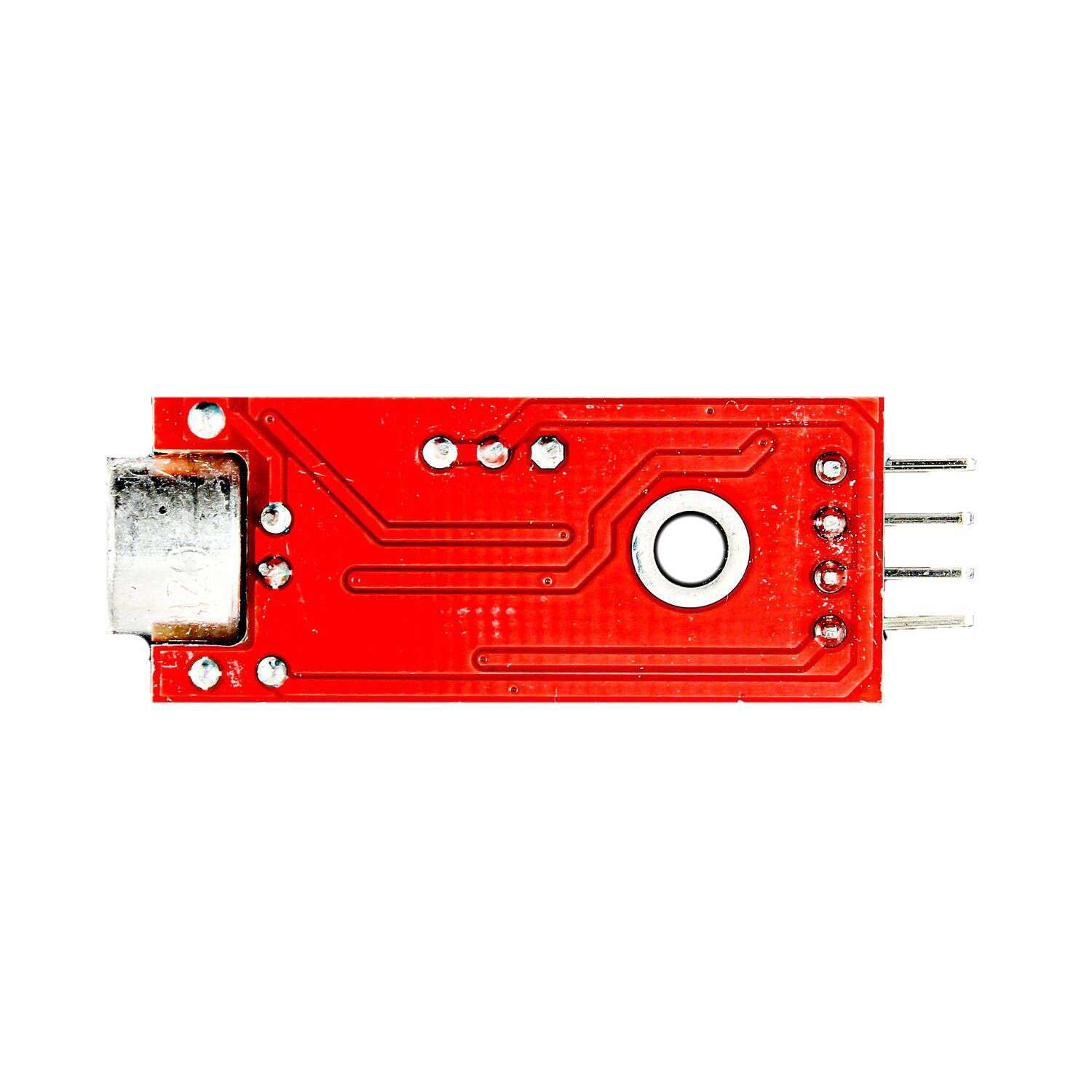

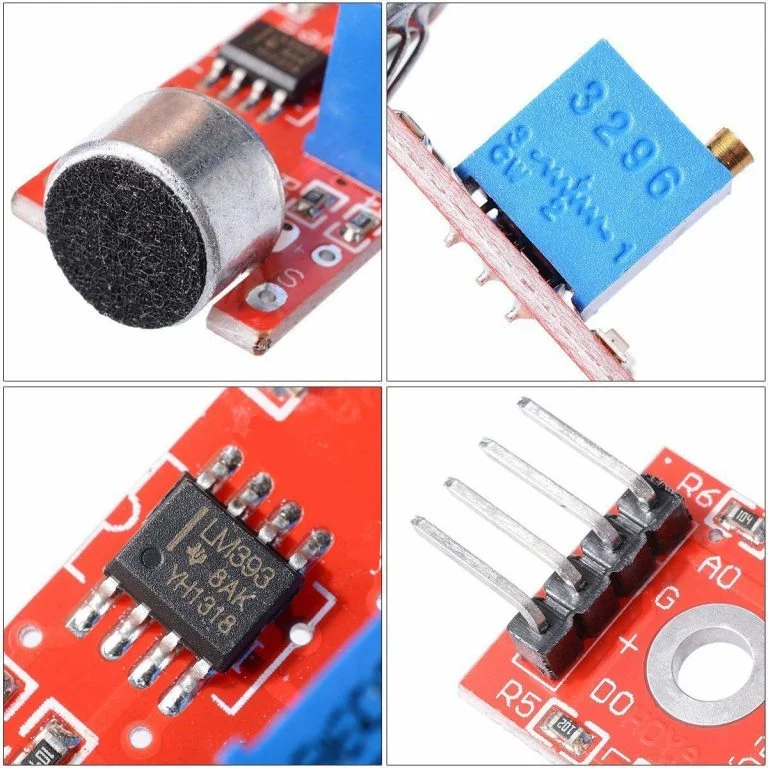
Microphone Sound Detection Sensor 4 Pin
35.00 EGP
Buy the Microphone Sound Detection Sensor 4 Pin for Arduino and microcontrollers. Features analog and digital outputs, adjustable sensitivity, and easy integration for sound detection, automation, and voice-activated projects.
Description
Microphone Sound Detection Sensor 4 Pin – For Arduino and Microcontrollers
The Microphone Sound Detection Sensor (4 Pin) is a compact and versatile sensor module designed to detect sound levels in the surrounding environment. It works seamlessly with Arduino, Raspberry Pi, ESP8266, ESP32, and other microcontrollers, making it an essential component for electronics hobbyists, students, and developers.
This sensor is widely used in projects that require sound detection, voice-activated control, or audio-triggered automation. With its adjustable sensitivity and both analog and digital outputs, it provides flexibility for simple and advanced projects. From creating clap-activated lights to building voice-controlled robots, this module opens up a world of possibilities for interactive and smart systems.

Key Features
-
4-Pin Interface: Includes VCC, GND, DO (digital output), and AO (analog output).
-
Sound Detection: Accurately detects noise or voice activity in the environment.
-
Analog Output (AO): Provides continuous voltage corresponding to sound intensity.
-
Digital Output (DO): Outputs HIGH/LOW signal when sound exceeds the threshold.
-
Adjustable Sensitivity: On-board potentiometer for fine-tuning detection levels.
-
Compact & Lightweight: Easy to integrate into DIY electronics projects.
-
Wide Compatibility: Works with Arduino, Raspberry Pi, ESP8266, ESP32, and other platforms.
-
Low Power Consumption: Suitable for battery-powered projects.

Applications
The Microphone Sound Detection Sensor 4 Pin can be used in a wide variety of real-world applications:
1. Voice-Activated Projects
-
Clap switch for turning appliances on/off
-
Voice-activated toys or robots
-
Smart home devices controlled by sound
2. Sound Monitoring Systems
-
Environmental sound level monitoring
-
Noise detection in security systems
-
Automatic volume adjustment projects
3. Automation Projects
-
Light or fan control triggered by sound
-
Doorbells or alarms activated by voice
-
Sound-based interactive installations
4. Educational & DIY Projects
-
Ideal for learning sensor integration with Arduino
-
Great for STEM and robotics kits
-
Used in experiments for sound recognition
Technical Specifications
-
Operating Voltage: 3.3V – 5V DC
-
Interface: 4 Pins (VCC, GND, AO, DO)
-
Output:
-
Analog Output (AO): Varies with sound intensity
-
Digital Output (DO): HIGH/LOW signal depending on threshold
-
-
Detection Sensitivity: Adjustable via on-board potentiometer
-
Microphone Type: High-sensitivity condenser microphone
-
Board Size: Compact, fits breadboards and modules easily
-
Compatibility: Arduino, ESP32, ESP8266, Raspberry Pi, STM32, and more

How It Works
The Microphone Sound Detection Sensor is built around a small microphone and an amplifier circuit. The microphone converts sound waves into electrical signals, which are then amplified.
-
In analog mode (AO), the sensor outputs a continuous signal that varies with the intensity of the sound. This can be read by the analog input of a microcontroller for precise sound level measurements.
-
In digital mode (DO), the module outputs a simple HIGH or LOW signal depending on whether the sound exceeds the threshold set by the potentiometer. This is useful for applications like a clap switch, where only an on/off response is required.
This dual output functionality makes the sensor extremely flexible for both beginners and advanced projects.


Example Use Case
Imagine you want to build a clap-controlled lamp using Arduino. By connecting the Microphone Sound Detection Sensor (4 Pin), you can program the Arduino to detect a clap sound. When the sound exceeds the threshold, the sensor sends a digital signal to the Arduino, which then activates a relay to switch the lamp on or off.
Similarly, the sensor can be used in a noise monitoring system, where the analog signal is read by the microcontroller and displayed on an LCD screen to show real-time sound intensity.
Advantages
-
Dual Output Options: Use analog for sound intensity measurement or digital for threshold-based detection.
-
Highly Adjustable: Sensitivity can be easily tuned using the potentiometer.
-
Simple Integration: Standard 4-pin design makes it easy to connect.
-
Versatile Applications: Works in both hobby projects and professional systems.
-
Cost-Effective: Affordable solution for sound-based control and monitoring.
Why Choose This Sensor?
The Microphone Sound Detection Sensor 4 Pin is one of the most widely used sound sensors in DIY electronics and IoT projects. Its combination of ease of use, adjustable sensitivity, and dual output capability makes it an excellent choice for students, hobbyists, and developers. Whether you’re creating an interactive project, automating your home, or experimenting with sound-based electronics, this module delivers dependable results at a budget-friendly price.
Conclusion
The Microphone Sound Detection Sensor 4 Pin is a powerful yet affordable module designed for detecting sound in a wide range of applications. With its analog and digital outputs, sensitivity adjustment, and compatibility with Arduino and microcontrollers, it is perfect for projects like voice-activated devices, automation systems, noise monitoring, and DIY learning experiments.
Compact, efficient, and easy to integrate, this sensor is an essential component for anyone working on sound-detection or audio-interactive projects.
Related products
-
- Out of Stock
- Magnetic Sensors
LM393 3144 Hall Sensor Module
- 27.50 EGP
- Read more
-


Reviews
There are no reviews yet.