

Line Following Robot Kit – DIY Unassembled Soldering Project
Original price was: 340.00 EGP.240.00 EGPCurrent price is: 240.00 EGP.
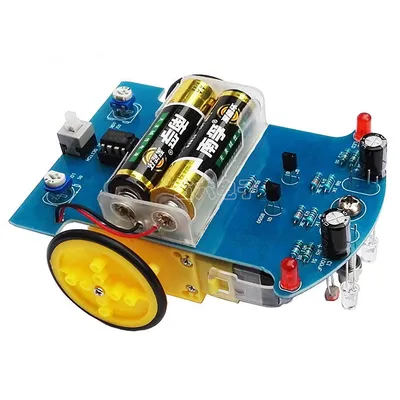
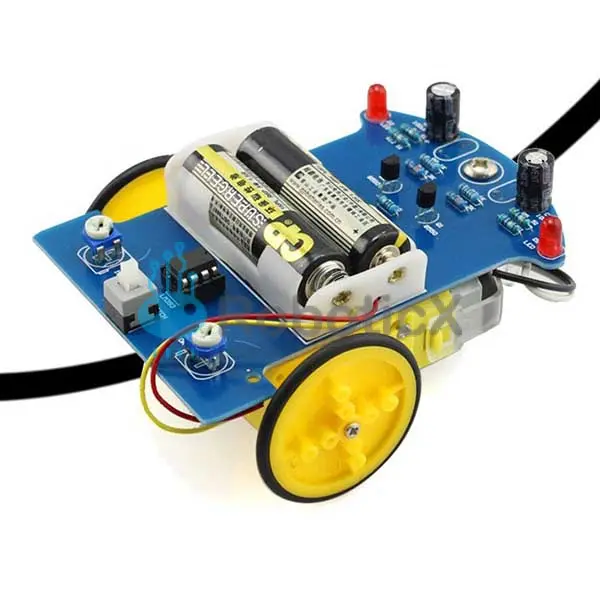
Take your robotics skills to the next level with this DIY Line-Following Robot Kit! Perfect for beginners and electronics enthusiasts, this kit is fully unassembled, giving you a hands-on experience in soldering, assembly, and programming basic robotic behavior.
Description
Line Following Robot Kit – DIY Unassembled Soldering Project
Line Following Robot Kit – Detailed Description
The Line Following Robot Kit is an exciting and educational DIY project designed for hobbyists, students, and electronics enthusiasts who want to explore the fundamentals of robotics, electronics, and motor control. Unlike pre-assembled robots, this kit comes completely unassembled, offering a hands-on experience that allows users to build the robot from scratch. By soldering and assembling all components manually, learners gain a comprehensive understanding of electronic circuits, sensors, motors, and control systems, making the process both educational and rewarding.
1. DIY Unassembled Kit for Hands-On Learning
This robot kit provides a complete learning experience, as it requires users to assemble and solder all the components themselves. The hands-on approach helps beginners and students develop practical skills in electronics, including:
-
Identifying components
-
Understanding circuit design
-
Learning soldering techniques
-
Following step-by-step assembly instructions
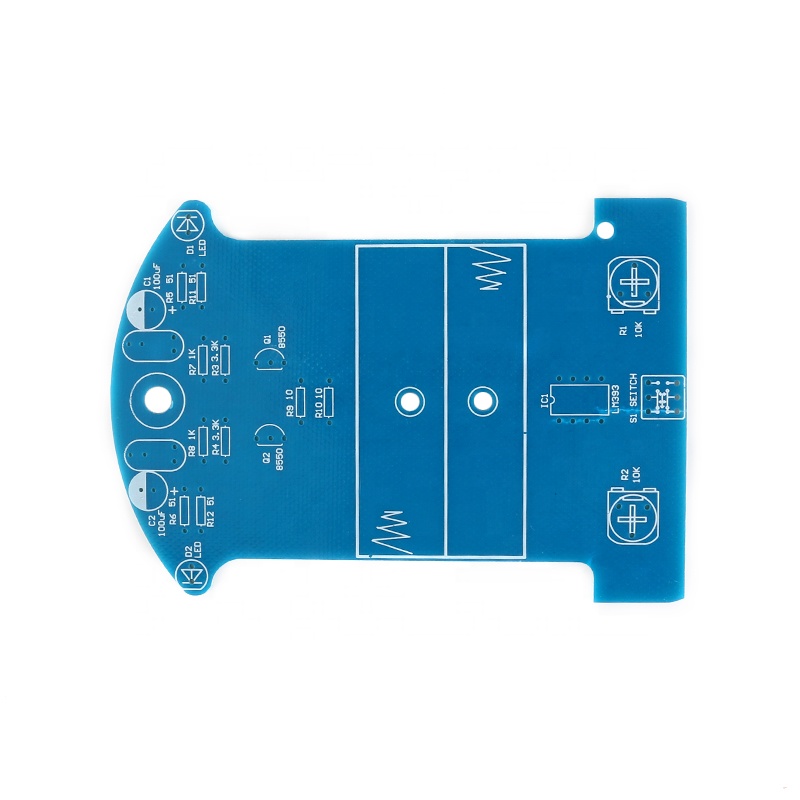
All components are clearly labeled, making it easier to assemble the robot accurately. By engaging in the assembly process, users gain confidence in handling electronics and develop a deeper appreciation for how individual components work together to form a functioning system. This approach encourages active learning, making it perfect for educational settings, hobbyists, and robotics clubs.
2. Intelligent Line Tracking Mechanism
At the heart of the robot’s functionality is the LM393 comparator chip, which works alongside photosensitive resistors to detect and follow lines on various surfaces. The sensors measure the intensity of reflected light, sending signals to the LM393 chip. When an imbalance is detected, such as one sensor detecting a black line while the other detects a white surface, the robot’s control circuit immediately adjusts the motors. For instance, one motor may stop while the other continues running to steer the robot back onto the line.
This precise and intelligent line tracking introduces users to basic autonomous navigation and sensor-based feedback systems, allowing them to observe how robots can respond to environmental changes in real time.
3. Fast and Sensitive Motor Control
The robot features a closed-loop control system, ensuring a rapid response to track changes. This system allows the robot to move smoothly over curves, corners, and sharp turns, demonstrating control engineering principles in action. The compact and lightweight design enhances its agility, making it ideal for tabletop experiments, classroom demonstrations, and small-scale robotics challenges. Users can directly experience how feedback mechanisms work, bridging theory and practice in electronics and robotics.
4. Assembly and Mechanical Design
The assembly process is divided into structured steps:
-
Circuit assembly: Components are soldered from low to high profile, with special attention to polar components like capacitors, transistors, and LEDs. Some components may be left temporarily unsoldered for calibration and testing.
-
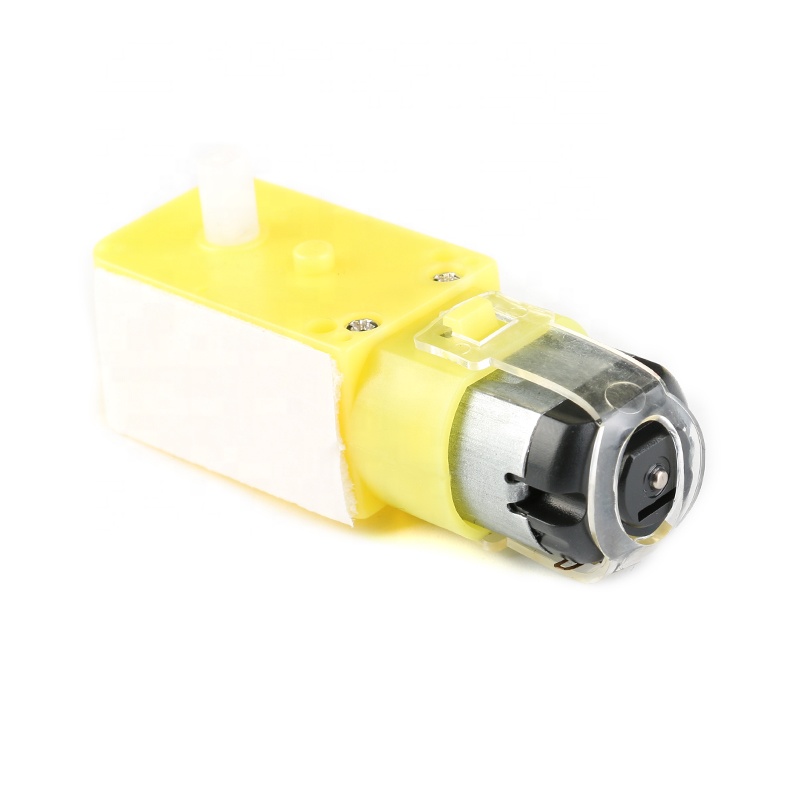
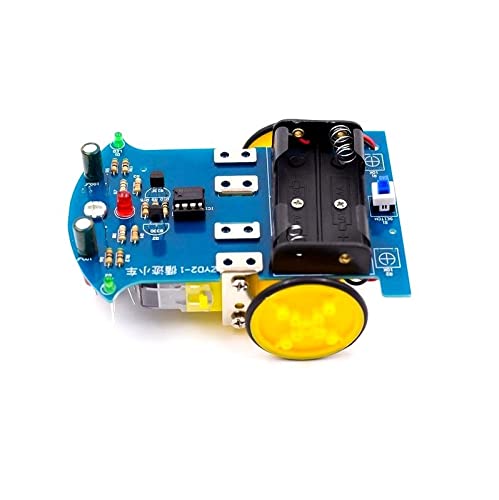
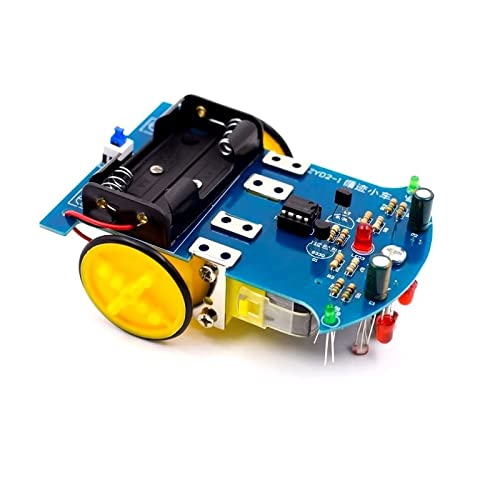
Mechanical assembly: The universal wheel, battery box, and wheels with silicone tires are mounted carefully. Motors are wired to ensure correct rotation, while sensors and LEDs are installed with precise alignment to optimize line detection.
This systematic assembly helps users understand both electronics and mechanical integration, providing a holistic approach to building functional robots.
5. Testing and Debugging
After assembly, the robot can be tested using two AA batteries (not included). Users can manually block the sensors to verify the motor response, and motor connections can be swapped if necessary to ensure proper directional control. This process not only confirms the robot’s functionality but also teaches critical troubleshooting skills and logical thinking, which are essential in electronics and robotics.
6. Educational Value and Practical Applications
The kit goes beyond being just a toy. It introduces learners to:
-
Circuit theory
-
Motor control
-
Sensor integration
-
Autonomous navigation
Users gain confidence in electronics and develop problem-solving skills. The kit encourages experimentation, allowing modifications in sensor sensitivity, speed adjustment, or alternative power options. This fosters creativity, innovation, and engineering thinking, providing a strong foundation for more advanced robotics projects.
7. Package Contents
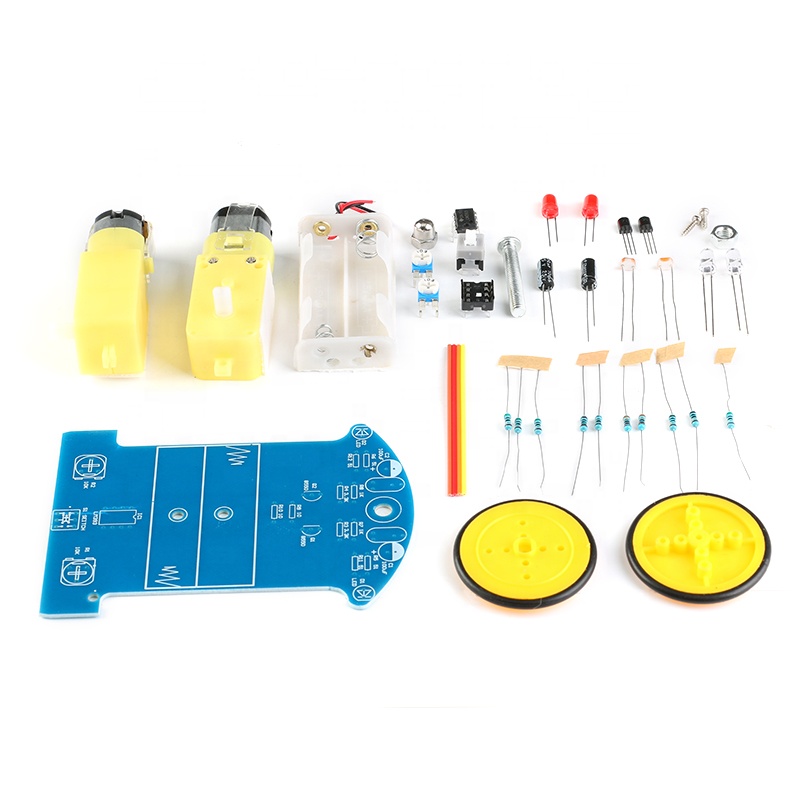
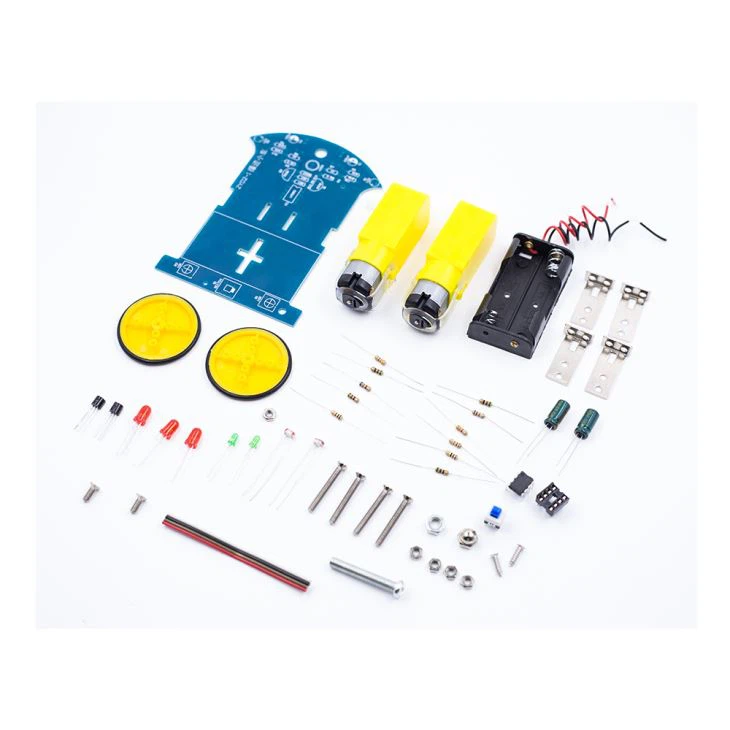
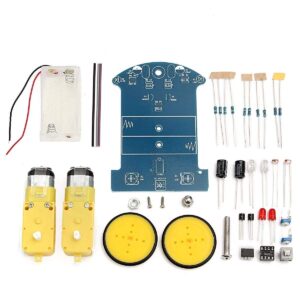
The package includes everything needed to build the Intelligent Tracking Line Smart Car, except the batteries:
-
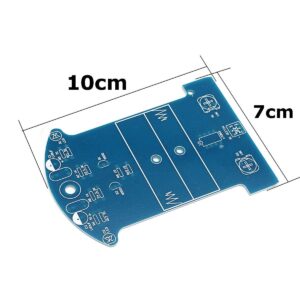
PCB with mounted components
-
Photosensitive resistors
-
LEDs
-
Motors
-
Wheels
-
Battery holder
-
Screws for assembly
-
Clear instructions for each step
Package Includes
-
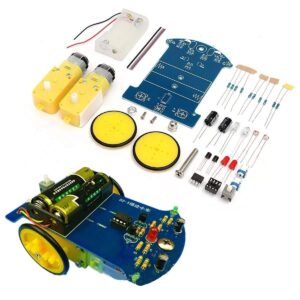
1 x Intelligent Tracking Line Smart Car Kit (Battery NOT Included)
✅ Perfect for hobbyists, students, and anyone wanting a hands-on robotics learning experience.
Summary
The Line Following Robot Kit is a comprehensive educational tool that combines intelligent line tracking, hands-on assembly, and practical learning. It is ideal for students, hobbyists, and robotics enthusiasts who want to gain real-world experience in electronics, motor control, and autonomous navigation. By completing this kit, users develop technical skills, creativity, and problem-solving abilities, making it a valuable addition to classrooms, home learning, or robotics clubs.
Related products
-
- Sale!
- Robotics
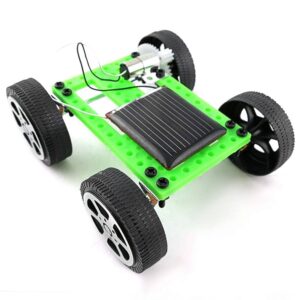
DIY Solar-Powered Robot Car
- Original price was: 135.00 EGP.100.00 EGPCurrent price is: 100.00 EGP.
- Add to cart
-
- Out of Stock
- Robotics
Tracing Car Rover 5
- 770.00 EGP
- Read more
-


Reviews
There are no reviews yet.