
Portable Power on the Bench: 22.5W Bidirectional Fast-Charging Power Bank Module, LIPO Cells, and Spot Welding With the FNIRSI SWM-10
Turn Scrap Cells into a Pocket Powerhouse
Ever looked at a pile of unused lithium cells and thought, "There's a power bank in there somewhere"? You're not alone. DIY power banks are one of the most satisfying projects for makers—they save money, reduce waste, and teach you real skills. But to do it right, you need three things: reliable cells, a smart charging module, and a way to connect everything without melting your fingers. That's where the FNIRSI SWM-10 portable spot welding machine comes in. In this post, we'll walk through building a compact 22.5W fast-charging power bank using LIPO cells and the right tools. Let's get bench-ready.
Why Build Your Own Power Bank?
Off-the-shelf power banks are cheap, but they're black boxes. When you build your own, you control the cell quality, the charging speed, and the form factor. Plus, you can repair or upgrade it later instead of tossing it. The key is using a module that handles fast charging safely and cells that can deliver the current. The 22.5W bidirectional fast-charging power bank module is a perfect starting point—it supports PD/QC and works both ways (charge in and out) via USB-C.
The Heart of the Build: 22.5W Bidirectional Module
This little board is the brains of your power bank. It takes 5V–12V input via USB-C (PD/QC) and outputs up to 22.5W to fast-charge your phone. Because it's bidirectional, you can also use it to charge the battery pack from a wall charger. The module includes protection circuitry for overcharge, overdischarge, and short circuits—essential for DIY lithium projects.
Tip: Always check the module's input voltage range before connecting cells. Most are designed for 3.7V nominal (1S) or 7.4V (2S) packs. The 22.5W module typically works with a single 3.7V cell or parallel cells.
Choosing the Right Cells: LIPO vs. 18650
Lithium polymer (LIPO) cells are flat, lightweight, and come in many sizes—perfect for slim power banks. For small builds, the 602030 LIPO battery cell 3.7V 600mAh is a handy option. It's small enough to fit in tight enclosures and has solder tabs for easy connection. However, 600mAh won't get you far with a 22.5W output—you'll want to parallel several cells or step up to larger capacities like 18650s. Still, for a compact emergency charger, a few of these in parallel work great.
Safety first: LIPO cells require careful handling. Never puncture, overcharge, or short them. Use a protection circuit (most 22.5W modules include one) and always balance parallel cells before welding.
Spot Welding: The Clean Way to Connect Cells
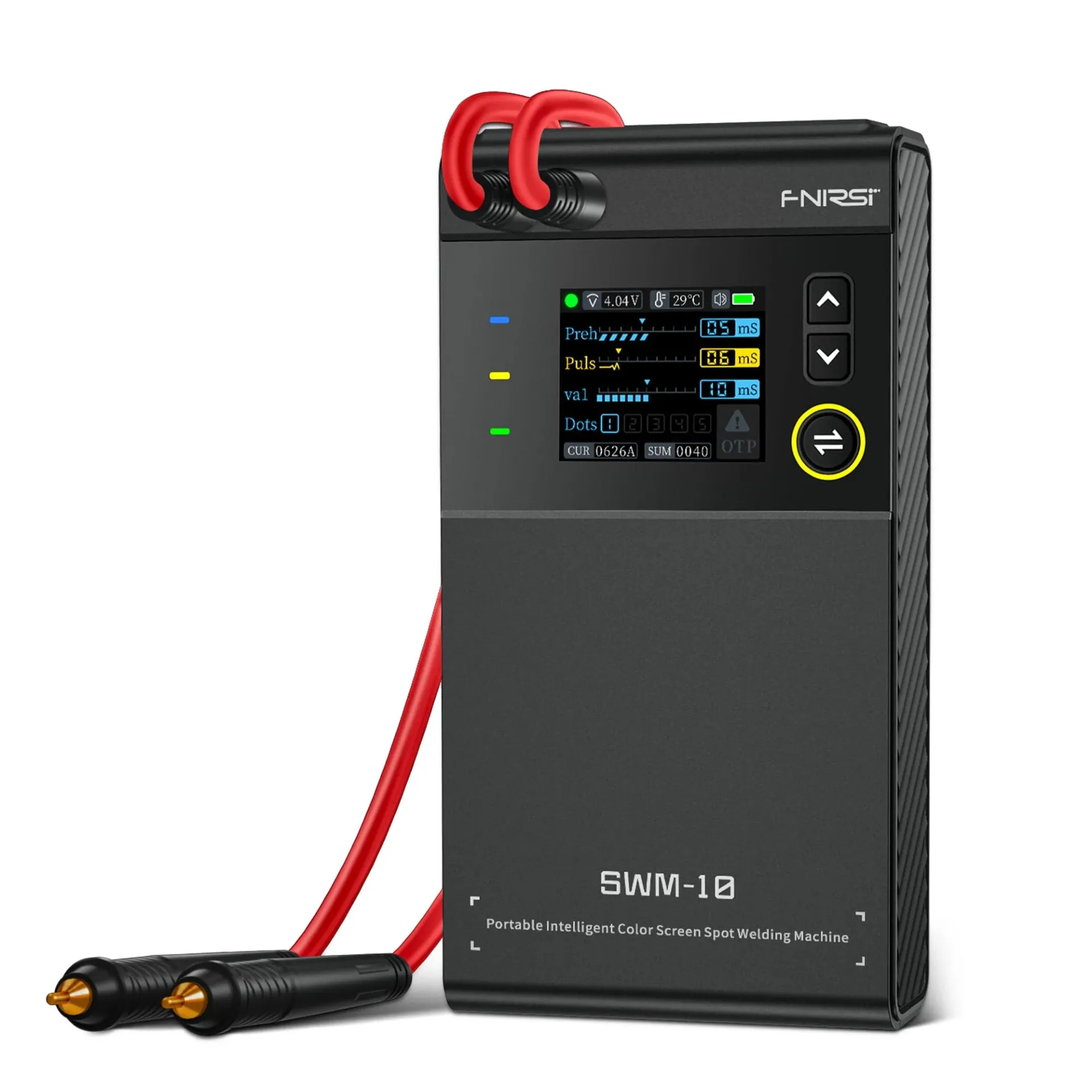
Soldering directly to lithium cells is risky—heat can damage the internal structure. Spot welding uses short pulses of current to fuse nickel strips to the cell tabs without excessive heat. The FNIRSI SWM-10 spot welding machine is a portable, color-screen unit that makes this job easy. It has adjustable power levels and a clear display, so you can dial in the right settings for 0.1–0.15mm nickel strips.
Spot welding tips:
- Clean the cell tabs with alcohol before welding.
- Use pure nickel strips (not nickel-plated steel) for lower resistance.
- Start with low power and test on a scrap cell.
- Press firmly but don't over-press—the electrodes should just touch the strip.
- Weld two spots per connection for reliability.
Powering the Bench: A 5V Supply for Your Module
While testing your power bank module, you'll need a stable 5V source. The Hi-Link 5V 1A 5W AC-DC power module (HLK-PM01) is a compact, isolated supply that's perfect for bench work. It takes 220V AC and outputs 5V at 1A—enough to power the 22.5W module for testing (though not at full output). It's also great for powering small projects safely.
Caution: This module handles mains voltage. If you're not experienced with AC wiring, use a certified USB charger instead.
Putting It All Together
Here's a quick step-by-step for your build:
- Plan your cell configuration. For a 22.5W output, you'll want at least 2–3 parallel 18650 cells or several LIPO cells in parallel. Calculate capacity: 600mAh × 4 = 2400mAh, which gives about one full phone charge.
- Spot weld nickel strips to connect cells in parallel. Use the FNIRSI SWM-10 with settings around 3–4 for 0.1mm nickel.
- Connect the module's B+ and B- to the pack's positive and negative terminals.
- Test the module with a USB load tester before sealing everything up.
- Insulate the pack with Kapton tape and heat-shrink tubing.
- Mount everything in a project box with cutouts for the USB-C port and a power button.
And there you have it—a custom fast-charging power bank that you built yourself.
Final Thoughts
Building your own power bank is a rewarding project that combines soldering, spot welding, and a bit of electrical knowledge. With the right tools—like the FNIRSI SWM-10 spot welder, a reliable 22.5W module, and quality cells—you can create a safe, high-performance power bank that rivals store-bought units. Just remember to prioritize safety: use protection circuits, never rush lithium work, and always test before you seal.
Ready to start your build? Browse our full range of modules, cells, and tools at Electra Store and get your bench set up today.